






When Air Conditioning Failures Demand Immediate Response
System breakdowns strike without warning. A commercial facility loses cooling mid-shift, threatening production schedules and worker safety. A residential unit fails during a heat advisory when temperatures exceed 100°F. Visit acrepair for more.
In these scenarios, standard service appointments scheduled days in advance offer no practical solution. Emergency repair protocols exist specifically for situations where cooling system failure creates immediate health risks, property damage, or business disruption.
Data from the Air Conditioning Contractors of America indicates that 78% of emergency service calls occur between May and September, with peak demand during heat waves when grid strain compounds equipment stress. The average emergency call response time ranges from 45 minutes to three hours depending on service area density, with urban zones typically receiving faster dispatch than rural locations.
Understanding what constitutes a true emergency versus a routine malfunction determines appropriate response protocols. Systems emitting burning odors, leaking refrigerant, or creating electrical hazards require immediate professional intervention. Units that simply underperform may warrant urgent attention but don't necessarily demand after-hours emergency rates.
When searching for 24 hour ac repair, homeowners should accurately assess whether their situation requires immediate overnight service or can wait until morning.
Critical Situations Requiring Emergency Service Protocols
Refrigerant leaks present dual hazards. Modern R-410A systems operate at pressures exceeding 400 PSI, and rapid decompression creates safety risks.
More significantly, leaked refrigerant in enclosed spaces displaces oxygen and concentrates near floor level where children and pets breathe. The EPA mandates certified technician response for any suspected leak, classifying these events as environmental and health emergencies.
Electrical failures manifest through tripped breakers, burning smells, or sparking components. Air conditioning systems draw substantial amperage—a typical 3-ton residential unit pulls 15-20 amps during operation.
Wiring degradation, failed capacitors, or compressor shorts create fire hazards that demand immediate power disconnection and professional assessment before any restart attempt.
Complete cooling loss during extreme heat qualifies as a health emergency, particularly for vulnerable populations. The CDC documents that heat-related deaths spike when indoor temperatures exceed 90°F for extended periods.
Infants, elderly residents, and individuals with cardiovascular conditions face measurably higher risk during cooling system failures. Heat indexes above 110°F compress the window for safe intervention to under four hours. These situations justify contacting 24 hour ac repair services immediately rather than waiting for regular business hours.
Water damage from drain line failures or evaporator leaks escalates rapidly. A clogged condensate drain can overflow at rates exceeding one gallon per hour, saturating insulation, drywall, and ceiling materials.
Mold colonization begins within 24-48 hours of water exposure, converting what starts as a mechanical issue into a property remediation project costing thousands beyond the original repair.
Commercial Versus Residential Emergency Protocols
Commercial ac repair near me searches reflect fundamentally different urgency calculations than residential equivalents. A restaurant losing refrigeration during dinner service faces immediate revenue loss measured in thousands per hour plus potential food spoilage violations.
Server rooms without cooling experience equipment shutdowns within 20-30 minutes as temperatures exceed operational thresholds. Manufacturing facilities may idle entire production lines when environmental controls fail.
Service level agreements for commercial properties typically guarantee response times under two hours with penalty clauses for delays. These contracts cost 40-60% more than standard maintenance plans but ensure priority dispatch and parts inventory allocation. Facilities operating 24/7 shifts require around-the-clock HVAC support that matches their operational cadence.
Residential emergency protocols balance genuine urgency against cost considerations. After-hours service calls typically include surcharges ranging from $150-$300 above standard rates, plus overtime labor multipliers of 1.5x to 2x normal hourly charges.
Homeowners must evaluate whether their situation justifies these premiums or whether temporary cooling alternatives suffice until regular business hours. Calling a 24 hour ac repair provider at 2 AM costs significantly more than scheduling an 8 AM appointment, though true emergencies warrant the premium.
Compressor Failures and Repair Viability
Can you repair an ac compressor? The answer depends entirely on failure mode and cost-benefit analysis.
Compressors function as sealed systems containing precision-machined components operating under extreme pressure and temperature differentials. Internal mechanical failures—valve plate cracks, piston scoring, or bearing degradation—render the unit unrepairable. Technicians cannot disassemble hermetically sealed compressor housings without destroying refrigerant containment and contaminating internal components.
External electrical failures present different scenarios. Capacitor failures account for 60% of compressor-related service calls yet require simple component replacement costing $150-$300.
Hard start kit installations resolve startup struggles in aging compressors for under $400, extending operational life by 2-4 years. Contactor replacements address clicking or humming symptoms at similar cost points.
Economic analysis determines repair versus replacement thresholds. A failed compressor in a 12-year-old system with declining efficiency readings argues for full system replacement.
The same failure in a 4-year-old high-efficiency unit justifies compressor replacement, which typically runs $1,200-$2,800 installed depending on tonnage and refrigerant type. When repair costs exceed 50% of replacement value and the unit has surpassed 60% of its expected lifespan, replacement delivers superior long-term value.
Warranty coverage dramatically alters this calculation. Many manufacturers provide 5-10 year compressor warranties that cover parts costs while labor remains the owner's responsibility.
A $1,800 compressor covered under warranty reduces out-of-pocket expense to $400-$600 for labor and refrigerant, making repair economically compelling regardless of system age.
Window Unit Emergency Considerations
Window ac unit repair requests surge during heat events when these supplemental systems transition from convenience to necessity. Unlike central systems, window units offer limited repair pathways due to integrated construction and low replacement costs.
Technicians can address specific failures—capacitor replacement, fan motor service, or control board repair—but parts costs often approach 50-70% of new unit pricing.
Refrigerant issues in window units present particular challenges. The sealed systems contain precise refrigerant charges measured in ounces rather than pounds.
Leak detection and repair in compact coil assemblies proves labor-intensive, typically requiring 2-3 hours of diagnostic and repair time. At $125-$175 per hour for service labor, repairs quickly exceed the $350-$600 replacement cost for equivalent capacity units.
Electrical failures in window units—failed compressors, burned contactors, or shorted windings—rarely justify repair investment. A replacement compressor for a 10,000 BTU window unit costs $180-$240 in parts alone, before accounting for recovery, evacuation, and recharge procedures that add 3-4 hours of labor.
New units carrying manufacturer warranties and improved efficiency ratings deliver better value in most scenarios.
Emergency window unit situations arise when these devices provide sole cooling for occupied spaces during extreme heat. Technicians responding to such calls typically arrive with replacement inventory, understanding that field repairs seldom prove cost-effective.
The service value lies in immediate temperature relief through new unit installation rather than repair attempts on failed equipment.
Geographic Search Patterns and Service Availability
Emergency ac repair near me searches peak between 6 PM and midnight, according to Google Trends data covering HVAC service queries. Equipment failures become apparent when residents return home to uncomfortable conditions, triggering urgent service requests outside standard business hours.
This demand pattern explains why established local ac repair operations maintain on-call technician rotations despite overtime cost premiums.
Service radius constraints affect emergency response availability. Metropolitan service areas with technician density support 30-60 minute response commitments within city limits.
Suburban zones extending 20-30 miles from dispatch centers experience 90-minute to 2-hour response windows. Rural properties beyond typical service areas may wait 3-4 hours or face service refusal altogether when distance makes emergency calls economically unfeasible.
Contractor licensing and insurance requirements create service boundaries. HVAC technicians hold state-specific licenses that prohibit operation across state lines without reciprocity agreements or separate licensing.
Emergency situations don't override these regulatory frameworks, meaning border communities may find local ac repair options limited to in-state contractors even when closer out-of-state providers exist.
Seasonal demand compression creates capacity constraints. During heat waves, emergency service queues extend to 6-12 hour waits as call volumes exceed available technician hours.
Established customers with maintenance agreements receive priority dispatch over new emergency callers, creating two-tiered service access. This reality makes preventive maintenance contracts valuable beyond their inspection and tune-up benefits.
Contractors offering 24 hour ac repair typically allocate their after-hours capacity to maintenance contract holders first, leaving limited availability for new customers during peak periods.
Diagnostic Protocols for Emergency Assessment
Emergency technicians follow systematic diagnostic sequences that prioritize safety and rapid failure identification. Initial assessment begins with thermostat verification—confirming proper settings, battery condition, and wiring integrity.
Approximately 15% of emergency calls resolve through thermostat correction without equipment service, making this first checkpoint essential before proceeding to mechanical diagnostics.
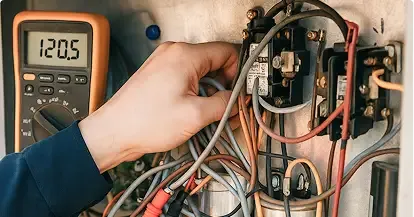
Electrical system evaluation comes next. Technicians verify proper voltage at the disconnect, test capacitor microfarad readings against specifications, and measure amp draw during compressor operation.
Voltage drops exceeding 10% under load indicate supply issues requiring electrician consultation before HVAC repair proceeds. Capacitor readings below 80% of rating trigger immediate replacement, often restoring full system function.
Refrigerant assessment involves temperature differential measurements and pressure testing. Proper system charge produces specific superheat and subcooling values that technicians compare against manufacturer specifications.
Pressure readings outside normal ranges indicate undercharge, overcharge, or restriction issues. While leak detection and refrigerant service require hours to complete properly, these measurements identify refrigerant problems within 15-20 minutes.
Airflow evaluation checks for restriction issues. Technicians measure static pressure, inspect filters, and verify blower operation.
Frozen evaporator coils indicate airflow restriction or refrigerant problems, requiring system shutdown and extended thaw periods before diagnosis continues. Blocked condensate drains present obvious visual evidence, though confirming whether water damage occurred requires more extensive inspection.
Cost Structures and Financial Decision Making
Emergency ac repair services carry premium pricing that reflects several cost factors beyond standard service calls. After-hours dispatch requires paying technicians overtime rates while maintaining daytime crew coverage, effectively doubling labor expenses for the service period.
Emergency vehicles stock broader parts inventories, tying up capital in rolling stock that earns return only during urgent calls.
Trip charges for emergency calls range from $125-$250 depending on time and distance, covering dispatch costs before any diagnostic or repair work begins. This fee typically applies toward total service costs but remains due even if homeowners decline recommended repairs.
Diagnostic time billing starts once technicians arrive, running $150-$225 per hour for emergency calls versus $95-$150 during regular hours.
Repair pricing follows similar premium structures. A capacitor replacement costing $175 during business hours escalates to $275-$350 for emergency service.
Compressor replacement jumping from $1,800 to $2,600-$3,200 reflects overtime labor rates and emergency parts sourcing from 24-hour supply houses that charge premium pricing for immediate availability.
Financial strategy considerations extend beyond immediate repair costs. Homeowners facing $2,000+ emergency repairs on systems over eight years old should request replacement quotes before authorizing work.
The incremental cost difference between emergency repair and next-day replacement installation often measures only $1,000-$1,500, money better invested in new equipment than aging systems likely to generate additional failures.
Preventive Strategies and System Monitoring
Professional maintenance reduces emergency failure probability by 60-70% according to longitudinal studies tracking service call patterns. Annual inspections identify developing problems—aging capacitors, refrigerant slow leaks, or failing contactors—before catastrophic failure occurs.
The $150-$250 annual maintenance investment typically prevents one $800-$1,200 emergency repair over a three-year period.
Smart thermostat integration provides early warning capabilities. Monitoring runtime patterns identifies systems cycling excessively or running continuously without reaching setpoint, both indicating developing problems.
Temperature trend data revealing gradual performance decline allows scheduled service before complete failure. Some advanced units send alerts when temperature recovery times exceed historical baselines.
Homeowner monitoring catches early symptoms before emergency escalation. Monthly filter inspections prevent airflow restriction that leads to frozen coils and compressor strain.
Observing condensate drainage confirms proper operation—standing water in drain pans indicates blockages requiring attention before overflow damage occurs. Unusual sounds, odors, or visible ice formation on refrigerant lines warrant immediate professional assessment.
Seasonal preparation reduces mid-summer emergency risk. Spring tune-ups completed in April or early May allow flexible scheduling and standard pricing while confirming system readiness before peak cooling demand.
This timing also ensures parts availability before summer inventory constraints develop and technician capacity tightens.
Emergency repair preparedness includes identifying service providers before crisis situations develop. Researching ac repair services options, verifying licensing and insurance, and reading recent customer reviews provides decision-making foundation that emotional urgency would otherwise compromise.
Establishing service relationships through maintenance contracts ensures priority emergency access when failures inevitably occur.


