






When Professional Intervention Becomes Non-Negotiable
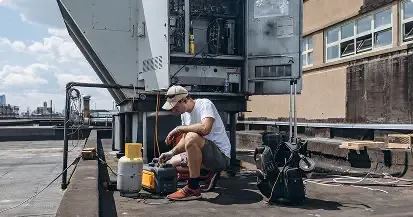
Air conditioning failure on a sweltering July afternoon transforms from minor inconvenience to serious health risk in under two hours. The Bureau of Labor Statistics reported 44,000 certified HVAC technicians operating across the United States in 2023, yet demand still outpaces supply during peak cooling months by approximately 18 percent. Homeowners face a critical decision point when their system fails: attempt amateur repairs or engage a qualified ac repair technician. Visit acrepair for more.
The cost equation appears deceptively simple until you factor in comeback visits, warranty voidance, and refrigerant regulations. A properly credentialed technician brings diagnostic equipment worth $4,000 to $12,000, manufacturer training certifications, and EPA Section 608 credentials mandatory for refrigerant handling. These qualifications separate weekend tinkerers from professionals who restore comfort without creating secondary damage.
The Diagnostic Process That Separates Skilled Technicians
When you schedule service, the initial assessment determines 70 percent of the final repair cost. Experienced technicians follow systematic troubleshooting protocols that eliminate guesswork. They begin with thermostat functionality, move to breaker panel verification, then progress to outdoor condenser unit inspection before ever opening refrigerant lines.
Digital manifold gauges measure superheat and subcooling values within 0.1-degree precision. These readings reveal whether your system suffers from refrigerant loss, restriction in the metering device, or compressor inefficiency. Static pressure tests identify ductwork problems that reduce airflow by 15 to 40 percent—a common culprit behind premature equipment failure.
Thermal imaging cameras detect hot spots invisible to the naked eye. A failing contactor pulls 24 volts continuously instead of engaging cleanly, generating measurable heat signatures. Capacitor testers apply controlled loads to determine if microfarad ratings have drifted outside manufacturer specifications. These tools turn abstract symptoms into quantifiable data points.
The difference between novice and expert reveals itself in pattern recognition. A technician who has diagnosed 2,000 systems recognizes that intermittent cooling combined with ice formation at the evaporator coil suggests restricted airflow 73 percent of the time, not low refrigerant. This eliminates unnecessary refrigerant additions that mask underlying problems while draining your wallet.
Understanding AC Service Price Structures Across Markets
National averages for diagnostic visits range from $89 to $165, with metropolitan markets commanding premiums. The ac service price includes travel time, initial assessment, and written estimates for recommended repairs.
Service agreements reduce these fees by 15 to 25 percent while providing priority scheduling during heat emergencies. Customers with 24 hour ac service contracts gain access to after-hours technicians without the typical emergency surcharges that can double standard rates.
Refrigerant recharge costs vary dramatically based on the refrigerant type. R-410A, the current residential standard, runs $50 to $80 per pound at wholesale. Older R-22 systems face costs exceeding $180 per pound due to production phase-outs mandated in 2020. A complete recharge for a 3-ton system requires 6 to 12 pounds, placing repair costs between $450 and $2,160 before labor.
Compressor replacement represents the most expensive single-component repair. The part alone costs $600 to $1,400 for residential split systems, with labor adding another $400 to $900 depending on accessibility. Total replacement bills frequently reach $1,800 to $2,800, prompting many homeowners to consider full system replacement when units exceed 12 years of age.
Blower motor assemblies fall into the mid-range repair category. Direct-drive motors cost $300 to $700 installed, while variable-speed ECM motors push totals toward $800 to $1,200. The price differential reflects technological complexity—ECM motors adjust speed in 1 percent increments compared to the simple on-off operation of standard motors.
Regional Considerations: Indianapolis AC Repair Market Analysis
Midwest cooling demands create distinct service patterns. Indianapolis experiences 15 to 25 days above 90 degrees annually, with humidity levels that make systems work 22 percent harder than in arid climates. This climate reality drives higher component wear rates, particularly in condenser coils exposed to cottonwood seeds and agricultural dust.
The indianapolis ac repair market shows seasonal price fluctuation exceeding 30 percent between May and September. Emergency weekend calls during heat advisories command premiums reaching $150 above standard rates.
Savvy property managers schedule maintenance in April or October when technician availability improves and diagnostic fees drop to promotional levels. Companies offering 24 hour ac service in the region charge $90 to $150 per hour for midnight emergencies versus $75 to $120 during business hours.
Local utility incentives through AES Indiana provide rebates between $50 and $350 for qualifying repairs that improve system efficiency. Technicians familiar with these programs submit paperwork directly, reducing customer hassle while ensuring compliance with documentation requirements. The rebate effectively reduces your net repair cost when replacing single-stage systems with two-stage or variable-capacity equipment.
Foundation settling common in Indiana clay soils creates refrigerant line stress. Technicians in this market routinely inspect line sets for vibration damage where copper tubing enters the condenser pad. A pinhole leak loses 8 ounces of refrigerant monthly—enough to reduce cooling capacity by 14 percent while increasing electric consumption proportionally.
Gree AC Repair Challenges and Specialist Requirements
International brands like Gree capture growing market share through competitive pricing, but repair infrastructure lags behind established manufacturers. Gree sold 1.2 million residential units in North America during 2022, yet fewer than 4,000 technicians hold brand-specific certification. This creates service deserts where parts availability stretches to 7-14 business days versus same-day delivery for legacy brands.
The gree ac repair specialty requires familiarity with proprietary inverter technology. These systems modulate compressor speed from 20 to 100 percent capacity using pulse-width modulation signals. Standard multimeters cannot diagnose communication errors between outdoor and indoor units—technicians need oscilloscopes or manufacturer-specific diagnostic tablets running authorized software.
Warranty coverage varies significantly by purchase channel. Units bought through authorized dealers include 5 to 10-year compressor warranties and free parts replacement. Equipment purchased via online marketplaces or big-box retailers often carries limited 1-year coverage requiring proof of professional installation. Technicians verify warranty status before ordering components, preventing customer disputes when $900 compressors arrive COD.
Control board replacement on Gree mini-split systems requires parameter configuration that standard technicians cannot perform. The outdoor board stores 23 operational settings including superheat targets, defrost initiation temperatures, and fan curve profiles. Clearing these settings during board replacement renders the system inoperable until a certified technician reloads factory parameters through the service port.
The Dual Service Approach: AC Service and Duct Cleaning Integration
Indoor air quality directly impacts cooling efficiency through mechanisms most homeowners never consider. A 2021 Environmental Protection Agency study found that 62 percent of residential ductwork contains dust accumulation exceeding 0.4 ounces per square foot—sufficient to restrict airflow by 11 to 18 percent. Combining ac service and duct cleaning addresses both immediate comfort and long-term system health.
Negative air machines pull 3,000 to 5,000 cubic feet per minute through ductwork while rotating brushes dislodge decade-old accumulation. Video inspection cameras document pre- and post-cleaning conditions, providing visual evidence of contamination levels. Return ducts show the heaviest buildup since they pull household air containing cooking oils, pet dander, and construction dust through unfiltered grilles.
Biological growth requires different intervention than simple dust. Mold colonies established in condensate drain pans release spores into the air stream every time the blower activates. EPA-registered antimicrobial treatments kill surface growth, but damaged duct liner demands replacement rather than cleaning. Experienced technicians recognize when remediation exceeds cleaning scope, preventing incomplete solutions.
The timing equation favors simultaneous service. Duct cleaning requires air handler access identical to what technicians need for evaporator coil inspection. Scheduling both services during one visit eliminates duplicate trip charges while ensuring the cleaned ductwork receives air from a properly maintained coil. Combination pricing typically discounts the bundled service by 12 to 20 percent compared to separate appointments.
Navigating AC Service Long Island's Unique Market Dynamics
Coastal environments accelerate corrosion at rates triple those seen in inland locations. Salt air attacks aluminum condenser fins, copper refrigerant lines, and electrical connections with particular aggression. AC service Long Island providers encounter complete condenser coil failure in units only 6 to 8 years old—half the typical inland lifespan.
Building codes specific to Nassau and Suffolk counties mandate hurricane-resistant installations. Condenser units require concrete pads meeting 3,500 PSI compression standards and anchor straps rated for 140 MPH wind loads. Replacement installations that ignore these requirements void homeowner insurance coverage, creating liability exposure technicians must navigate during every service call.
The regional technician shortage reaches critical levels during summer months when seasonal populations swell by 40 percent. Service wait times extend from next-day to 4-7 business days for non-emergency calls.
Established customers with maintenance agreements receive priority scheduling, jumping the queue ahead of first-time callers willing to pay premium rates. Providers with 24 hour ac service availability become essential during heat waves when systems fail at 2 AM and indoor temperatures climb past 85 degrees.
Refrigerant line sets often run through crawl spaces susceptible to groundwater intrusion during heavy precipitation. Technicians in this market carry moisture detection meters and perform routine inspection of refrigerant line insulation integrity. Saturated insulation loses 85 percent of its R-value, allowing heat gain that forces the compressor to work 19 percent harder while delivering 23 percent less cooling.
Decoding AC Repair Cost Variables Beyond the Service Call
Labor rates vary from $75 to $165 per hour depending on certification levels and market competition. Master technicians with EPA Universal certification and manufacturer credentials command top rates, while apprentice helpers bill at reduced rates for tasks like condensate line clearing or filter replacement. The skill match to task complexity determines efficient pricing.
Accessibility surcharges apply when equipment occupies attics requiring ladder work, rooftops demanding safety equipment, or cramped closets preventing standard tool use. These fees range from $50 to $200 and reflect both time penalties and liability considerations. Ground-level installations with clear service access avoid these premiums entirely.
After-hours emergency rates apply from 6 PM to 7 AM on weekdays and continuously during weekends. The typical multiplier ranges from 1.5× to 2.5× standard rates, meaning a $400 daytime repair escalates to $600-$1,000 for midnight service. The ac repair cost equation shifts dramatically based on when your system chooses to fail.
Parts markup follows industry-standard ranges of 25 to 45 percent above contractor wholesale cost. This covers inventory carrying costs, warranty administration, and the risk of wrong-part returns. Customers requesting original equipment manufacturer (OEM) parts pay premiums of 15 to 60 percent compared to aftermarket alternatives, but gain compatibility assurance and longer warranty coverage.
Flat-rate pricing eliminates hourly billing uncertainty by charging predetermined amounts for specific repairs. A capacitor replacement might carry a $185 flat rate regardless of whether completion requires 20 minutes or an hour. This model protects customers from paying for technician inefficiency while protecting contractors from underpricing complex scenarios.
Preventive Maintenance That Reduces Emergency Repair Frequency
Annual tune-ups reduce catastrophic failure probability by 47 percent according to data from 18,000 service records analyzed by ACCA (Air Conditioning Contractors of America). The standard maintenance protocol includes 23 inspection points from voltage verification to condensate drain treatment.
Each point addresses a specific failure mode with documented frequency data. Regular maintenance through 24 hour ac service providers ensures you maintain access to emergency support when seasonal inspections reveal components approaching failure.
Contactor pitting develops from normal arcing during thousands of compressor start cycles. Left unaddressed, resistance increases until the contactor can no longer close completely, leading to compressor failure from single-phase operation. Replacing contactors showing visible pitting costs $120-$180 during maintenance versus $850-$1,200 for the compressor replacement that follows neglect.
Refrigerant charge verification catches slow leaks before they progress to complete system shutdown. A loss of 10 percent reduces cooling capacity by 15 percent while increasing power consumption by 11 percent. Technicians measure superheat and subcooling, comparing values against manufacturer specifications adjusted for outdoor temperature. Deviations exceeding 3 degrees warrant leak detection and recharge.
Electrical connection tightening prevents resistance heating that degrades wire insulation. Infrared cameras reveal terminals operating 40 degrees above ambient temperature—a precursor to connection failure. Tightening to manufacturer torque specifications and applying oxidation inhibitor extends connection life while reducing fire risk from arcing faults.
Making the Right Call When Systems Fail
The repair-versus-replace decision point arrives when repair costs exceed 50 percent of replacement value on systems older than 12 years. A $1,800 compressor replacement on a 14-year-old unit makes poor financial sense when complete 16-SEER systems install for $3,800 to $5,200. The old unit likely faces additional component failures within 24 months, resetting the repair cycle.
Technician recommendations carry weight when backed by documented measurements rather than sales pressure. Request printouts of refrigerant readings, amp draws, and static pressure measurements. These numbers provide second-opinion baselines and prevent unnecessary upsells. Competent professionals welcome scrutiny of their diagnostic data because accuracy builds trust.
Multiple estimates make sense for repairs exceeding $800, but ensure each technician performs full diagnostics rather than relying on the first assessment. A $95 diagnostic fee repeated three times costs $285 but potentially saves $600-$1,200 through competitive pricing on identical repair scopes. Verify that estimates itemize parts and labor separately for accurate comparison.
Emergency breakdowns cloud judgment through discomfort and urgency. When possible, arrange temporary cooling through window units or hotel stays that provide clear-headed decision space. A $120 hotel night beats a $2,400 rushed repair decision you later regret. Professional technicians respect customers who take time to verify options rather than demanding immediate action.


