






When Manhattan's AC Fails: Understanding the Local Repair Landscape
Manhattan residents rely on air conditioning systems through increasingly intense summer months, with average July temperatures consistently reaching 85°F and heat index values topping 100°F. When a cooling system fails in a 600-square-foot studio or a multi-zone townhouse, the discomfort arrives within hours. The city's 1.6 million residents generate demand for roughly 45,000 AC repair service calls annually during peak season, according to NYC Department of Buildings maintenance records. Visit acrepair for more.
The local repair ecosystem serves every building type: pre-war walk-ups with window units, mid-century high-rises with central systems, and modern construction featuring ductless mini-splits. Manhattan's unique housing stock creates specific challenges.
Buildings constructed before 1950 often lack the electrical capacity for modern high-efficiency systems, while luxury developments demand specialized knowledge of smart thermostats and zoned climate control.
Response time matters in this environment. A broken AC on the Upper West Side affects productivity, sleep quality, and health for vulnerable populations.
Service providers operating within Manhattan's five boroughs typically quote 2-4 hour response windows for emergency calls, though actual arrival times vary by season and technician availability.
Common AC Problems Facing Manhattan Properties
Window unit failures dominate service calls in neighborhoods with older housing stock. These portable systems account for approximately 60% of Manhattan cooling installations.
Typical issues include refrigerant leaks, compressor failure, frozen evaporator coils, and electrical connection problems. A standard window unit repair averages $150-$300, while replacement becomes more economical when repair costs exceed 50% of a new unit's price.
Central air systems present different challenges. These installations serve larger apartments, townhouses, and commercial spaces. Common failures involve:
-
Thermostat calibration errors causing temperature inconsistencies
-
Clogged condensate drain lines leading to water damage
-
Refrigerant leaks reducing cooling capacity by 20-30% annually
-
Blower motor failures preventing air circulation
-
Compressor issues requiring costly replacement components
Split AC repair Manhattan specialists encounter equipment serving single rooms or entire floors. These ductless systems gained popularity after 2010 as energy-efficient alternatives to window units.
The outdoor compressor connects to indoor air handlers through refrigerant lines, creating points of failure that require diagnostic expertise. A refrigerant leak in a mini-split system costs $200-$600 to locate and repair, depending on line length and accessibility.
Commercial properties add complexity. Rooftop package units cooling office buildings and retail spaces require specialized tools and building access coordination. These systems often exceed 10-ton capacity, with repair costs starting at $500 for minor issues and reaching $5,000+ for major component replacement.
Cost Structure for AC Repair Services
Manhattan's repair pricing reflects labor rates, parts availability, and service call premiums. A diagnostic visit typically costs $75-$150, though many companies waive this fee when customers approve repairs. Understanding the cost breakdown helps property owners budget appropriately and evaluate quotes.
Refrigerant services represent significant expenses. R-22 refrigerant, phased out under EPA regulations, now costs $80-$150 per pound due to limited supply.
Systems requiring R-22 face a decision point: pay premium prices for remaining inventory or invest in retrofit/replacement. Newer R-410A refrigerant runs $40-$70 per pound. A typical recharge adds 2-4 pounds, placing refrigerant-related repairs at $200-$600 before addressing the underlying leak.
Component replacement costs vary by system type and part complexity:
Compressor replacement ranges from $800-$2,800, representing the highest single-component expense. The compressor functions as the system's heart, circulating refrigerant and enabling heat exchange.
Most technicians recommend evaluating total system age before approving compressor replacement—if the unit exceeds 10 years, full replacement often delivers better long-term value.
Blower motors cost $300-$600 installed. These components move conditioned air through ductwork or directly into living spaces. Failure symptoms include weak airflow, unusual noises, or complete air circulation loss.
Capacitors and contactors represent lower-cost repairs at $100-$250. These electrical components regulate power flow to motors and compressors. They fail predictably after 5-7 years of operation, making them frequent repair items on aging systems.
Evaporator coil replacement reaches $900-$2,200 depending on system size and accessibility. Leaking coils require coil replacement rather than repair due to the thin aluminum construction and refrigerant pressure requirements.
Labor charges in Manhattan reflect the city's high cost of living and business operation. Standard service calls during business hours run $100-$200 per hour for licensed technicians.
After-hours, weekend, and holiday service commands 1.5-2x premiums. Complex repairs requiring multiple technicians or extended diagnostic time increase labor costs proportionally.
Finding Reliable AC Repair Service Near Me
Location matters when selecting an AC repair company. Technicians based in or near Manhattan respond faster to emergency calls and maintain familiarity with local building codes, electrical configurations, and common equipment types. A service provider operating from New Jersey or outer boroughs adds 30-60 minutes to response time before traffic delays.
Licensing verification protects consumers from unqualified contractors. New York State requires HVAC technicians to hold EPA Section 608 certification for refrigerant handling.
This certification exists in four types (Type I for small appliances, Type II for high-pressure systems, Type III for low-pressure systems, and Universal covering all categories). Legitimate companies employ Universal-certified technicians and carry liability insurance meeting New York City's minimum requirements.
Service guarantees separate professional operations from fly-by-night providers. Reputable companies warranty repairs for 30-90 days, covering both parts and labor.
This guarantee demonstrates confidence in diagnostic accuracy and repair quality. Companies offering same-day service should clarify whether this applies to common repairs or includes complex jobs requiring ordered parts.
Online review patterns reveal service quality indicators. Look beyond star ratings to specific reviewer feedback about response time, pricing transparency, diagnostic accuracy, and post-repair follow-up.
Companies with 50+ reviews averaging 4.5+ stars demonstrate consistent service delivery. Single negative reviews surrounded by positive feedback typically reflect isolated incidents rather than systemic problems.
Price transparency separates ethical operators from predatory ones. Professional companies provide written estimates before beginning work, itemizing parts, labor, and diagnostic fees.
They explain repair necessity in plain language and present options when multiple solutions exist. Pressure tactics, verbal-only quotes, or reluctance to provide detailed pricing warrant immediate red flags.
Choosing the right ac repair company protects you from unnecessary costs and ensures quality workmanship that lasts through the hottest months.
Emergency vs. Scheduled Service Timing
Manhattan summers create predictable service demand spikes. The two-week period following the first 90°F day generates call volumes 300-400% above baseline, according to ServiceTitan data tracking HVAC businesses.
During these peaks, emergency service availability tightens considerably. An established ac repair company prioritizing same-day calls often books 48-72 hours out for non-emergency work.
True emergencies involve health risk scenarios: households with infants, elderly residents, or individuals with heat-sensitive medical conditions. Most AC repair services prioritize these calls, sometimes displacing scheduled maintenance appointments.
Non-emergency situations—units struggling to cool or producing unusual sounds but still operational—receive standard scheduling.
Preventive maintenance reduces emergency call likelihood by 40-60%. Annual tune-ups performed in April or May identify failing components before summer heat stresses systems.
Technicians clean coils, check refrigerant levels, test electrical connections, lubricate motors, and verify thermostat accuracy. This $100-$200 investment prevents many mid-summer failures that cost $300-$800 to repair urgently.
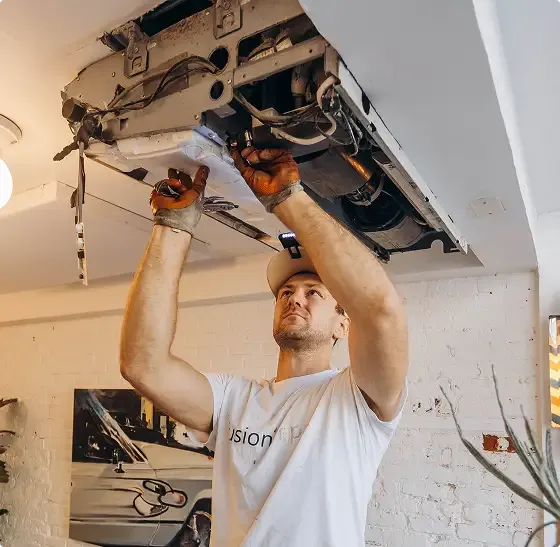
Split System Considerations for Manhattan Properties
Ductless mini-split installations transformed Manhattan cooling options after 2005. These systems offer zone control without ductwork, making them ideal for renovations, additions, and buildings where central air installation proves impractical.
Split AC repair Manhattan specialists encounter these systems increasingly as original installations age past the 10-year mark.
Common mini-split problems include:
Communication errors between indoor and outdoor units manifest as error codes on digital displays. These failures stem from wiring issues, control board problems, or sensor malfunctions.
Diagnosis requires specialized equipment reading system fault codes. Repair costs range from $150 for simple wiring fixes to $800 for control board replacement.
Drainage problems plague mini-splits more than traditional systems. The indoor unit condensate pump removes moisture, but clogs create water leaks damaging walls and floors. Regular cleaning prevents most drainage issues, but pump failure requires $200-$400 replacement service.
Outdoor unit protection matters in Manhattan's environment. Units installed on balconies, rooftops, or building sides face harsh winter conditions, street-level vibration, and airborne contaminants.
Protective covers and proper mounting reduce premature failure, but exposed units often require service earlier than sheltered installations.
Refrigerant line issues present unique challenges. Lines running through walls between indoor and outdoor components develop leaks at connection points or from physical damage during renovations.
Locating leaks within walls requires pressure testing and sometimes infrared cameras. Repair involves accessing the damaged section, which may require cutting drywall and subsequent patching.
Seasonal Maintenance Strategies
Spring preparation prevents summer failures. Scheduling service in April accomplishes multiple goals: securing preferred appointment times before peak demand, identifying problems while weather remains comfortable, and ensuring optimal efficiency as temperatures rise.
Technicians performing spring maintenance check refrigerant charge, clean outdoor coils, inspect electrical connections, test capacitors, and verify thermostat operation.
Fall shutdown procedures extend equipment life in climates with distinct seasons. Manhattan's freezing winters require winterization for certain AC types.
Window units demand removal or insulated covers preventing cold air infiltration. Central AC systems need outdoor unit protection from ice and snow accumulation. Mini-splits benefit from cleaning before dormancy and protection for outdoor components.
Filter management represents the simplest maintenance task with significant impact. Standard disposable filters require monthly replacement during cooling season.
Neglected filters reduce airflow by 15-30%, forcing systems to run longer and work harder. This increases energy consumption by $30-$60 monthly while accelerating component wear. Filters cost $3-$15 at hardware stores, making this the highest-return maintenance investment available.
When Repair No Longer Makes Financial Sense
The 50% rule guides repair-versus-replace decisions. When repair costs exceed half the replacement cost of a comparable new system, replacement typically delivers better value. This calculation considers system age, efficiency, and likely remaining lifespan.
A 15-year-old central AC system requiring a $1,500 compressor replacement illustrates this analysis. The current system likely operates at 10-12 SEER efficiency.
A new system costs $3,500-$5,500 installed and operates at 16-18 SEER, reducing energy costs by 30-40%. The old system, even with a new compressor, remains inefficient and likely to develop additional problems. Replacement becomes the economically rational choice.
Refrigerant considerations affect this calculation significantly. R-22 systems face perpetually increasing refrigerant costs.
A system requiring repeated refrigerant additions due to slow leaks might consume $400-$800 annually just maintaining charge. Replacement with R-410A equipment eliminates this recurring expense while improving efficiency.
Age thresholds matter. Systems under 5 years old warrant almost any repair short of complete failure.
Units 6-10 years old require case-by-case evaluation based on repair cost and maintenance history. Systems exceeding 12 years face mounting failure risk and inferior efficiency compared to modern equipment. At 15+ years, replacement should accompany any major component failure.
Navigating Manhattan's Building Regulations
New York City enforces specific codes governing AC installation and repair. Local Law 150, enacted in 2016, requires building owners to maintain HVAC systems according to manufacturer specifications and professional standards. Failure to maintain systems properly creates liability exposure when malfunctions affect multiple units or cause property damage.
Co-op and condo boards impose additional restrictions. Many buildings require board approval for AC installations or major repairs affecting common areas.
Window unit weight restrictions prevent structural issues—most buildings limit window units to 80 pounds. Mini-split installations requiring facade penetration typically need board architectural review.
Electrical capacity constraints affect older buildings. Pre-1950 construction often provides 30-60 amps per apartment, insufficient for modern central AC systems drawing 20-30 amps alone.
Adding cooling capacity may require electrical service upgrades costing $2,000-$8,000 before AC installation begins. Licensed electricians must certify work complies with NYC Electrical Code requirements.
Noise ordinances shape equipment selection and installation. New York City limits outdoor unit operation to 42 decibels between 10 PM and 7 AM in residential zones. Modern equipment achieves these levels, but improper installation or lack of vibration isolation creates compliance problems and neighbor complaints.
The Value Proposition of Professional Service
DIY repair tempts cost-conscious residents, but AC systems require specialized knowledge, tools, and refrigerant handling certification. EPA regulations prohibit venting refrigerants—even small amounts—into the atmosphere.
Violations carry fines up to $37,500 per incident. Only EPA-certified technicians may legally purchase refrigerant or service sealed systems.
Professional diagnostics prevent unnecessary repairs. Homeowners frequently misidentify problems based on symptoms.
A system blowing warm air might reflect a simple thermostat setting, a tripped breaker, a dirty filter, low refrigerant, or compressor failure. These scenarios require vastly different interventions ranging from $0 to $2,500.
Accurate diagnosis the first time avoids throwing money at the wrong problem. Hiring a qualified ac repair company ensures proper troubleshooting and lasting solutions.
Warranty protection requires professional installation and service. Most manufacturers void equipment warranties when unlicensed individuals perform repairs. This policy protects manufacturers from damage caused by improper service while ensuring qualified technicians handle refrigerants and electrical components safely.
Safety concerns justify professional engagement. AC systems operate at high voltage and pressure.
Capacitors store lethal electrical charges even when power is disconnected. Refrigerant lines contain pressurized gas reaching 400+ PSI.
Improper handling causes electrical shock, refrigerant burns, or system explosions. Professional technicians carry insurance covering these risks, while homeowners assume full liability for DIY accidents. Working with a trusted ac repair company means your family stays safe while your cooling system gets fixed correctly.
Manhattan's AC repair market serves diverse needs across varied housing stock and building types. Understanding common problems, cost structures, and service provider selection criteria enables informed decisions when cooling systems fail.
Balancing emergency response needs against preventive maintenance scheduling reduces lifetime ownership costs while maximizing comfort during increasingly warm summers.


