AC blowing hot air
How to separate an airflow problem from a true cooling failure.
Read the guideIf your AC trips a breaker, reset it once at most—then stop. This guide explains the safe observations you can make, the likely HVAC causes, and when NYC electrical work belongs to a licensed electrician.
Certification and license records are available on request while our public verification page is in progress.
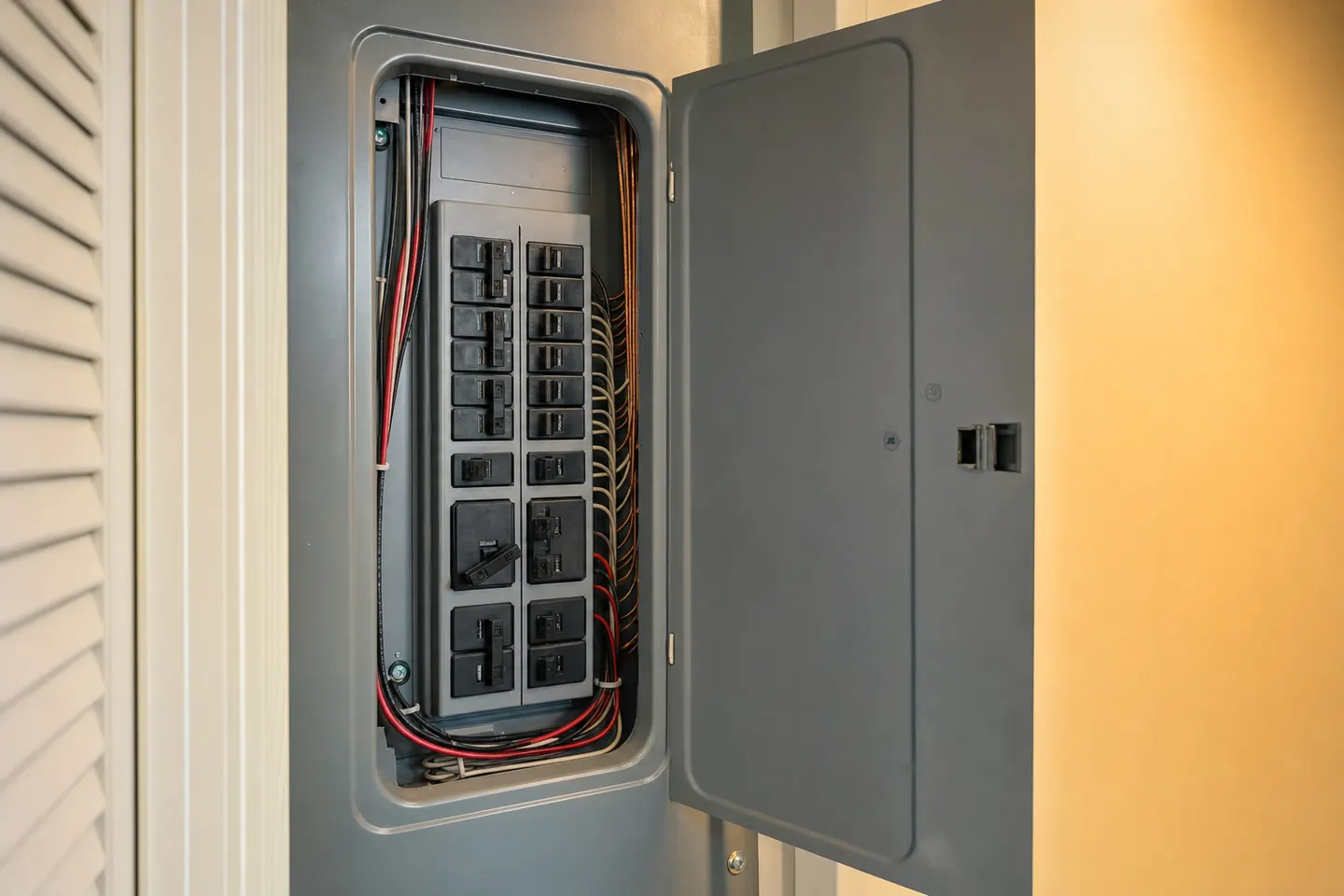
An AC breaker trips because a protective device detected abnormal current, a fault, or a circuit problem. It is not an inconvenience to defeat. If the breaker has tripped, turn the thermostat off before looking at the panel. A resident may identify whether the labeled breaker is in the tripped position and may reset it once only after the equipment is off. If it trips again, leave it off and call for qualified help.
For urgent AC electrical symptoms that need prompt service, call immediately for burning smell, smoke, heat at the panel, repeated trips, buzzing at a disconnect, or water near wiring. Do not hold a breaker on, use a larger breaker, replace a fuse with a higher rating, or remove the panel cover. Those actions can bypass the protection that prevents conductors from overheating.
A breaker trip can originate in the AC, the branch circuit, the disconnect, a shared building condition, or the panel. The diagnostic must identify the source before anyone decides it is “just an HVAC problem.”
With cooling switched off, observe the breaker label and position without removing any cover. If it is tripped, reset it once only. Then leave the AC off initially; if it immediately trips or trips as cooling begins, stop. Note whether lights dimmed, whether any other appliance on the same circuit was running, and whether rain, a leak, renovation, or recent service preceded the event.
Check visible accessible items only: a damaged power cord on a window unit, water beneath a PTAC, a blocked outdoor unit, or a burned smell. Do not touch exposed wiring, open a disconnect, or pull a hardwired unit apart. In a rental or co-op, report the panel and equipment location to the superintendent or management because they may control access to utility closets.
A useful service note includes breaker size if it is plainly printed, equipment type, trip timing, and any sound. “Trips after 10 minutes only on hot afternoons” points a technician in a different direction than “trips the instant the thermostat calls.”
A weak run capacitor, failing contactor, failing condenser fan motor, or compressor problem can drive current beyond normal operation. On a hot day, a dirty condenser or stopped outdoor fan raises head pressure and makes the compressor work harder. The breaker responds to the load; resetting it without correcting the cause only repeats the event.
A technician measures voltage, running current, capacitor values, wire condition, contactor condition, and fan performance. Compressor tests can include start behavior and insulation checks appropriate to the system. These tests occur around live circuits, so they are not a homeowner procedure. A capacitor/contact replacement may be in the $220–$450 range; compressor or major electrical defects require a broader repair comparison.
A rooftop condenser in a doorman building or a rear-yard unit behind a locked gate may mean a second access step. Share access rules early so the technician can inspect both halves of the system rather than guessing from the indoor air handler.
Damaged insulation, loose terminations, rodent damage, water intrusion, and aged disconnects can create a short or ground fault. Window AC cords and wall sleeves are also exposed to weather and physical wear. A trip after rain or after a condensate leak is particularly important to report because moisture can affect equipment or nearby electrical components.
In Queens homes and multi-family buildings we serve, older service equipment and later additions can leave circuit history unclear. The AC may have been added after the building’s original wiring, or a prior renovation may have changed a shared load. The technician documents the HVAC-side condition; a licensed electrician takes responsibility for branch-circuit or panel repairs.
Do not use an extension cord for a window AC unless the manufacturer explicitly allows a specific setup, and never use a power strip. Heat at plugs and cords is a reason to stop using the unit and request service.
Equipment must be served by conductors and overcurrent protection sized to its nameplate and applicable code. A breaker that trips is not permission to install a larger one. Oversizing protection can allow conductors or equipment to overheat before the breaker interrupts the fault. Nameplate data, manufacturer instructions, and the actual circuit path matter.
New York City uses the NYC Electrical Code, based on the 2011 code with 2022 amendments. Panel work and electrical alterations are not a resident DIY task. Major electrical work requires a licensed electrician and appropriate DOB filing; building management may also impose access, insurance, and scheduling requirements. An HVAC technician can identify that the issue is on the electrical supply side, but should not substitute for the required electrical scope.
In a co-op or pre-war walk-up, ask management whether the panel is apartment-owned or building-controlled and who holds access. That prevents a service call from stalling at a locked meter room or an unapproved panel alteration.
Other possibilities include a seized indoor blower, a shorted control transformer, a failing condensate pump, a defective thermostat cable, a shared overloaded circuit, or a breaker that is itself weak. The order of testing depends on when the trip occurs. Immediate trips often point toward a short or severe electrical fault; trips after a run period can point toward heat, motor load, or compressor performance.
A ductless system may trip at the outdoor disconnect while the indoor head still looks normal. A PTAC can have cord, sleeve, heater, or internal control issues. Central systems can involve an air handler circuit and an outdoor condenser circuit, so the exact breaker label matters. The visible symptom is not enough to choose a part.
If a building has a larger commercial HVAC load, Local Law 97 planning does not change basic electrical safety. Building engineers still need correctly protected circuits and licensed electrical work when supply changes are required.
The technician begins with safety, then verifies the equipment nameplate, voltage at accessible points, current draw, component condition, and trip sequence. The goal is to say whether the AC component is causing overcurrent or whether the branch circuit/panel needs an electrician. This is more useful than simply getting the system to start once.
If the cause is a failed HVAC component, the repair can proceed after testing and authorization. If the cause is supply wiring, panel condition, or circuit capacity, the technician should document the observation and coordinate with a licensed electrician or building team. That boundary protects the resident and keeps DOB-related work in the correct trade.
Expect an accessible diagnosis to take roughly 45–90 minutes. Multiple circuits, roof access, intermittent trips, or equipment that cannot be safely energized may need additional time. Ask what was measured and whether it is safe to leave the breaker off until the next step.
Common HVAC-side electrical repairs often fall around $220–$450 for a capacitor or contactor, $450–$900 for a blower motor, and $400–$900 for a control board, before unusual access or larger system work. Electrical branch-circuit or panel costs depend on licensed electrician scope, building conditions, and filing requirements, so they should be estimated separately.
Keep condensate drains maintained, protect outdoor equipment from debris, use the correct filter so blower load stays reasonable, and book maintenance before extreme heat. For room units, inspect cords and plugs visually each season and replace damaged equipment rather than improvising a cord repair.
Repeated breaker trips always deserve diagnosis. A single reset is a controlled observation; a cycle of resets is not troubleshooting.
Use plain observations: “the labeled AC breaker trips as soon as cooling starts,” “it runs ten minutes before tripping,” or “it tripped after rain and there is water under the air handler.” Do not remove a dead-front panel, test terminals with a meter, or try to identify conductor sizes inside the panel. The timing and conditions give qualified tradespeople useful direction without placing a resident in contact with live equipment.
A good outcome may involve two scopes. The HVAC technician may identify a failed fan motor, capacitor, compressor, control board, or water-related equipment condition. If testing points to receptacle, branch wiring, service capacity, or panel defects, a licensed electrician must handle that work. Building management may need to coordinate access and DOB-related filing. Clear division of responsibility is a safety feature, not a delay tactic.
Do not let an urgent cooling need turn into an improvised electrical repair. Portable cooling equipment also needs a suitable circuit and manufacturer-approved connection. If conditions are unsafe, leave the breaker off, document the problem, and request qualified service rather than repeatedly testing a fault.
After a qualified repair, the equipment should be tested through a normal cooling start and enough run time to verify current draw, fan operation, and stable cooling. If an electrician repairs the circuit, the HVAC equipment still needs to be checked under its actual load; a new breaker position alone does not prove the condenser, blower, or controls are operating correctly.
Keep the service report with the unit’s nameplate information, breaker observation, and component findings. This is valuable in a co-op or rental when a future technician sees an intermittent fault, and it helps distinguish a repeated equipment failure from a building-circuit concern. It also gives an owner a factual record when deciding whether a heavily repaired legacy unit should be replaced.
Do not treat a successful single restart as a permanent resolution if the breaker previously tripped under heat or after a longer run. The system may need to operate through normal demand before the corrective work can be verified. Report another trip promptly and leave the breaker off until the responsible trade evaluates it.
Reset it once only after switching the equipment off and confirming there is no burning smell, heat, smoke, or water hazard. If it trips again, leave it off and arrange qualified service.
Indirectly, yes. Restricted airflow can strain a blower and dirty outdoor coils can increase compressor load. A technician must test the actual electrical and airflow condition rather than assume the filter is the only cause.
No. Breaker and conductor sizing must follow the equipment nameplate, manufacturer instructions, and code. Increasing a breaker can create an overheating and fire risk.
It can be either. A failed capacitor, motor, compressor, or control can be an HVAC fault; damaged wiring, circuit capacity, or panel problems need a licensed electrician. Testing establishes the boundary.
NYC uses the NYC Electrical Code based on the 2011 code with 2022 amendments. Major electrical work requires a licensed electrician and appropriate DOB filing.
High outdoor temperature can expose weak condenser airflow, dirty coils, a failing fan motor, or compressor stress. The system needs measurements while operating under load.
Do not use an extension cord or power strip unless the manufacturer explicitly permits a specific arrangement. A damaged cord, warm plug, or repeated trip is a reason to stop use and arrange service.
How to separate an airflow problem from a true cooling failure.
Read the guideWhat to do when condensate appears at the unit, ceiling, or wall.
Read the guideA broader symptom-by-symptom troubleshooting path.
TroubleshootingUrgent HVAC electrical symptoms and system outages; the emergency line is answered 24 hours.
Diagnosis for condenser, air-handler, compressor, fan, and control faults.
Repair planning for apartment, townhouse, co-op, and multi-family equipment.
Call (212) 201-9201 or send the symptom, building type and equipment through the quote form.