
Central AC maintenance
A system-specific checklist for central air equipment.
Maintenance checklistA useful HVAC tune-up prevents avoidable failures; it is not a five-minute visual visit. In NYC, a thorough annual maintenance appointment generally costs $180–$420 per system. Here is what should be checked, what a service agreement changes and when maintenance reveals a repair.
Certification and license records are available on request while our public verification page is in progress.
For a residential or light-commercial AC system in New York City, a planned annual tune-up is commonly $180–$420 per unit. The lower end is a serviceable window unit, PTAC or straightforward split system. The upper end reflects larger equipment, roof access, deeper coil work, difficult filters, multiple indoor components or a commercial maintenance visit. Repairs, refrigerant, replacement filters and major cleaning are separate unless the written scope says otherwise.
A maintenance appointment is cheaper and more useful when it is scheduled before the first heat wave. It gives the technician time to clean, test and order a part without an emergency dispatch. A tenant should still report active water leaks, electrical smells or a breaker that will not reset instead of waiting for the next tune-up.
A PTAC in a first-floor room is not the same visit as a condenser on a roof reached through a building with restricted freight-elevator hours. Roof keys, ladder work, staging, security procedures and multiple zones change labor time. A pre-war building with filters behind a difficult return grille can take longer than a newer apartment with accessible equipment.
The important question is not whether the visit is at the bottom of the range; it is what is being done and recorded. A vague “inspection” without electrical readings, drain attention or a note on coil condition has limited preventive value. For systems showing weak cooling, planned AC maintenance service should become a diagnostic visit rather than a promise that cleaning alone will fix it.
A one-off visit suits an owner with one simple system, a reliable reminder and no need for priority scheduling. It is also a good way to evaluate a contractor before agreeing to recurring work. Expect the same careful scope, a report and clear separation between maintenance and repairs.
A maintenance agreement can make sense for a building with multiple PTACs, a restaurant split system, a small office or a condo portfolio. It can bundle seasonal visits, inventory records and planned filter changes. The useful contract states the number of visits, equipment list, response terms, exclusions, repair labor rate and whether consumables are included. “Free tune-ups” without a scope are not a maintenance plan.
Before cooling season, attention goes to outdoor coil cleanliness, fan operation, drain reliability, controls, airflow and refrigerant performance. Before heating season, the checklist changes for heat pumps, boilers, furnaces and makeup-air equipment. A heat pump needs both heating and cooling function checked, not just the side currently in use.
For central systems, filter condition affects comfort and equipment strain. Use the filter type and change interval the system can support. A very restrictive filter can reduce airflow if the return system was not designed for it. A technician should explain the trade-off rather than automatically selling the highest MERV number.
Routine maintenance does not include a compressor, control board, blower motor, refrigerant leak repair or duct reconstruction. It may find evidence that one of those is needed. The technician should price and explain that repair separately, with a reason for the recommendation.
Refrigerant does not get “used up.” A low charge points to a leak or a prior service issue. A proper response is to locate the likely leak, discuss repair options, evacuate and weigh in the appropriate charge when the repair is approved. Topping up a leaking system at every tune-up creates a bill without fixing the problem.
For a property manager, keep an equipment list with apartment or suite, model, serial number, filter size, prior repairs and access contact. This makes the next visit faster and helps distinguish a recurring complaint from a new issue. Multi-unit PTAC programs benefit from grouping work by floor or wing while keeping each unit’s findings separate.
Commercial sites have additional reasons to document maintenance. Rooftop equipment, refrigerant handling and shut-down coordination can affect tenants and operations. A commercial refrigerant task may also involve FDNY Certificate of Fitness requirements for the person in charge, including CoF B-14 where applicable. Confirm site-specific responsibility before work starts.
Describe the equipment, symptoms, last service date, building access and any water or electrical issue. If the unit is not cooling or a breaker trips, say so: the appointment may need diagnostic time rather than a maintenance slot. For a system that is running normally, book before the season and ask for the maintenance scope in writing.
In Queens, as elsewhere in the city, a building’s access rules can matter as much as the zip code. Providing superintendent contact information and knowing whether a roof, terrace or sleeve is involved lets the contractor schedule the right crew and time.
At the end of a good visit, you should know the filter status, coil condition, drain condition, basic electrical readings, thermostat or controls observations, and any repair recommendation. You should not be pressured into a replacement because a system is dusty.
Maintenance is a way to extend usable life and reduce inconvenient failures, not a guarantee against every part failure. The value is in catching drain issues, airflow restrictions, loose electrical components and coil contamination before they become an outage.
A planned maintenance visit should begin with the occupant’s experience: rooms that run warm, unusual noise, water at the sleeve, odors, breaker trips, thermostat problems and the date of the last filter change. Those observations guide the inspection and prevent a technician from treating every unit as identical. The equipment should be identified by model and location so future findings can be compared instead of recreated from memory.
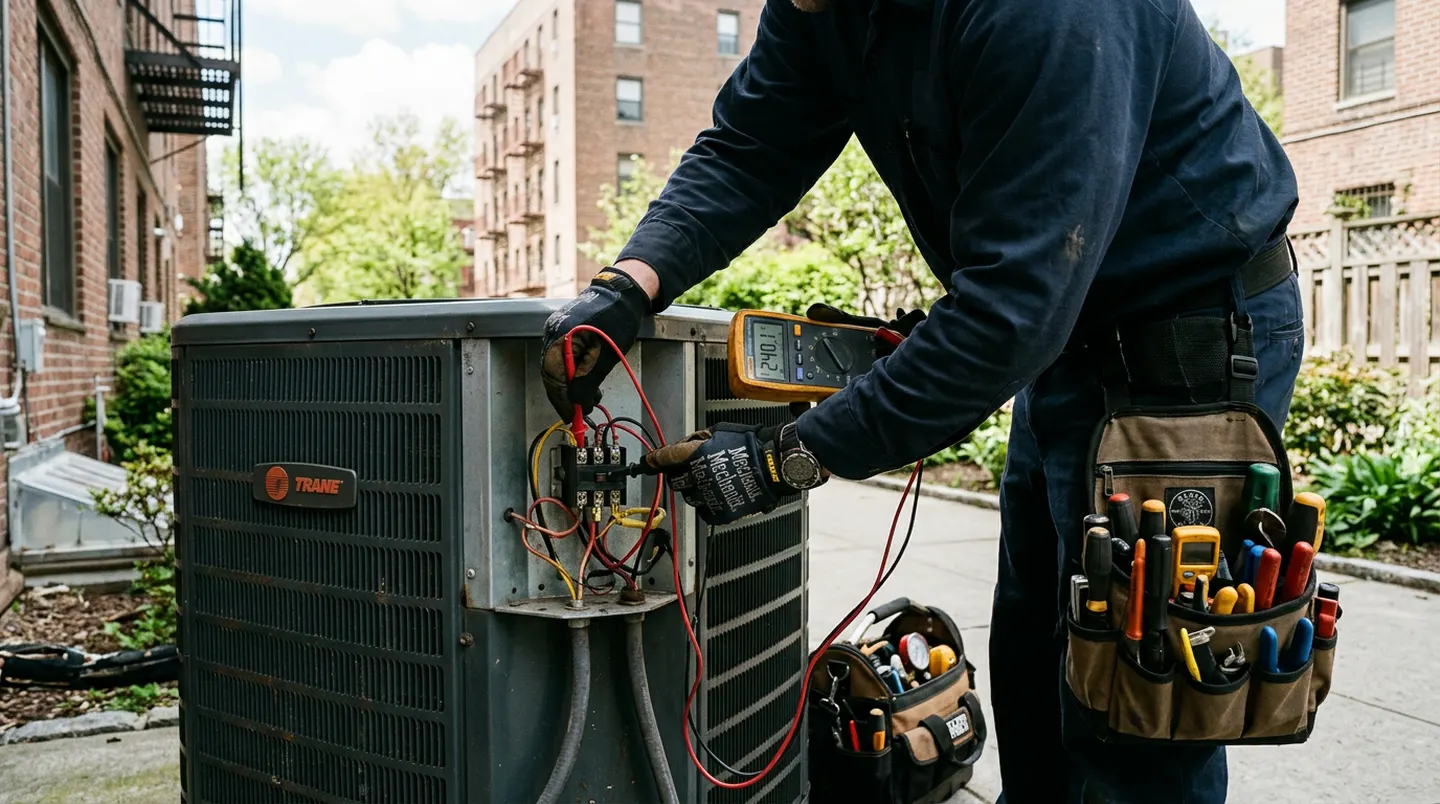
For a split system, basic recorded information can include outdoor and indoor coil condition, accessible electrical measurements, temperature difference, drain behavior, filter condition and visible refrigerant-line insulation. For PTACs and window units, it can include sleeve condition, discharge temperature, condensate path, fan noise, cord and plug condition and safe support. A maintenance report does not have to be complicated, but it should be more specific than “checked OK.”
Coil cleaning needs judgment. A lightly dusty coil may need ordinary cleaning; a coil embedded with construction dust, grease or cottonwood may require deeper work and access. Chemical use, water management and protection of finishes should be decided for the actual equipment. A technician should not spray a coil blindly inside a finished apartment or claim that every maintenance visit includes a complete deep clean regardless of condition.
Filter work is equally practical. Record the size, type and condition, then agree who supplies replacements. In an apartment, an owner may keep the correct filters on hand. In a commercial site, a contractor may stock and change them under agreement. What matters is that the interval fits loading and equipment design, rather than an arbitrary monthly schedule that either wastes filters or lets them clog.
Finally, close the visit with priorities. A damaged drain float or failing capacitor can be addressed before a heat wave; a cosmetic cabinet issue can wait. Separating “repair now,” “monitor” and “capital plan” helps a board or owner allocate money without treating every observation as an emergency. That clarity is the main reason to pay for a planned tune-up instead of a rushed call during an outage.
For cooling equipment, schedule in spring before demand peaks; for heat-pump and heating equipment, schedule again before heating season. This avoids the common problem of discovering a tired capacitor, blocked drain or failed control when every technician is responding to no-cooling calls. It also lets an owner seek a second opinion or order a non-stock part without rushing.
Have the equipment location, model number if available, last maintenance record, filter size, superintendent contact and access limitations ready. Tell the technician about roof access, pets, water stains, unusual sounds and thermostat behavior. These small details help set the right appointment length and produce a maintenance report that a building manager, board or future technician can actually use.
Maintenance becomes more valuable when the technician can compare readings with a prior visit. Keep a simple log for each system: date, filter size, cleaning performed, drain condition, notable readings, parts replaced and reported comfort issue. A recurring freeze-up, water complaint or short-cycle pattern can be hidden when every visit starts with no history. The log also lets an owner see whether a recommendation is new, worsening or already addressed.
For rentals and co-ops, decide who is responsible for routine occupant tasks. A tenant may be expected to keep furniture away from an indoor head and replace an accessible filter, while the owner is responsible for a condensate pump, electrical work and exterior coil. The building may control PTAC sleeves and exterior grilles. Clear responsibility avoids a tune-up becoming a dispute over a blocked return or an unreported water issue.
Do not confuse cleaning with calibration. A clean coil cannot correct incorrect thermostat programming, a failing sensor or a control sequence that runs equipment outside occupied hours. Ask the technician to test the control response and explain any setting that has been changed. For commercial equipment, document operating schedules and contacts who may authorize adjustments; this reduces the risk that a well-intended repair creates a tenant comfort or after-hours access problem.
Finally, set the next action before the technician leaves. That may be a filter order, a quoted repair, a follow-up diagnostic, a report to the managing agent or simply the next seasonal appointment. If an item is safe to monitor, say what symptom would change that decision. This makes the maintenance invoice a practical management record rather than a receipt that is forgotten until the next no-cooling call.
Most residential systems benefit from one planned cooling-season visit each year. Heat pumps and commercial systems may need a spring and fall visit because they operate in both modes or for longer hours.
No. Refrigerant is not a routine maintenance item. If testing shows a low charge, the technician should diagnose the cause and price leak work separately.
It can be more efficient for multiple units or sites, but compare scope rather than a headline discount. The agreement should list visits, equipment, exclusions and repair terms.
No. It reduces preventable failures and identifies developing problems, but a part can still fail unexpectedly. The visit should document what was checked.
Follow the lease and building rules. The person booking should provide access, equipment information and authorization for any separately priced repair.
A system-specific checklist for central air equipment.
Maintenance checklistUnderstand diagnostics and common repair pricing.
Cost guideWhat can be cleaned safely and when to call a technician.
Coil guidePlanned seasonal maintenance with a written scope.
Measured diagnosis when maintenance finds a fault.
PTAC service for apartment and building equipment.
Call (212) 201-9201 or send the symptom, building type and equipment through the quote form.