
How to choose the best air conditioner
A practical NYC buying framework for equipment type, placement and approvals.
Buying guideSEER2 helps compare matched air-conditioning equipment, but the rating is only one part of a good NYC replacement decision. See how capacity, installation scope, rebates and actual operating conditions affect value.
Certification and license records are available on request while our public verification page is in progress.
SEER2 is the current seasonal cooling efficiency rating used for many residential air conditioners and heat pumps. Higher SEER2 generally means the equipment uses less electricity over the standardized test procedure to deliver the same cooling. It is useful for comparing eligible models in the same product class, but it does not predict an exact Con Edison bill for a particular apartment or brownstone.
Actual electricity use depends on capacity, runtime, thermostat settings, weather, duct leakage, maintenance, solar gain, occupancy and electric rates. A high-SEER2 condenser connected to undersized, leaky or poorly balanced ducts cannot deliver its rated seasonal outcome. A correctly installed moderate-efficiency system can outperform an ambitious rating installed with airflow problems.
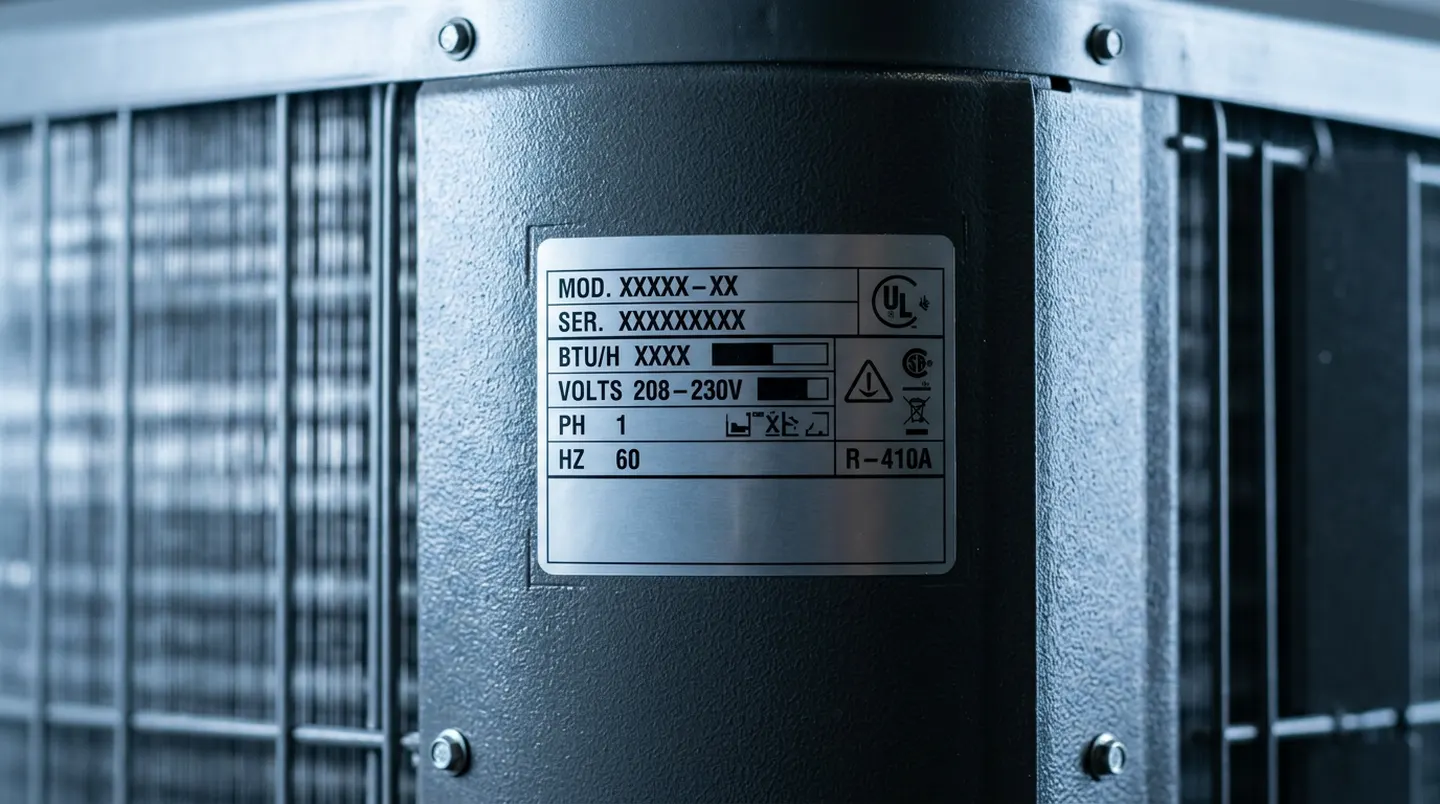
When comparing proposals, make sure both show the matched indoor and outdoor equipment. Efficiency ratings apply to approved combinations, not to a condenser label in isolation. The model numbers and AHRI-style match documentation should be part of the equipment record.
Federal minimum efficiency requirements depend on equipment type and region, and manufacturer inventory changes. Rather than relying on an old generic chart, ask the installer for the current compliant model, the matched system rating and the applicable product documentation. In NYC, board approval, electrical work, access and duct corrections can be larger budget items than moving one rating tier higher.
A higher rating can make sense when cooling hours are substantial, the system will be held for many years and the rest of the installation supports the performance. It can make less sense when the capacity is wrong, the system barely runs, or a planned renovation will change the load soon. Compare lifetime ownership costs, not just the initial equipment price or a headline savings percentage.
For existing equipment that is not cooling correctly, start with AC maintenance and diagnostics. A dirty coil, failing capacitor, restricted filter or low airflow can raise consumption and comfort complaints without proving that replacement is necessary.
A simple annual cooling-cost estimate multiplies seasonal cooling energy by the applicable electricity price. To compare two ratings, use the same capacity and expected cooling hours, then state the assumptions. The difference in energy use may be meaningful over time, but the dollar result is sensitive to weather and utility rates. A written estimate should not promise a fixed payback period unless it clearly identifies those inputs.
Include the installed price difference, financing if any, expected service life, maintenance and possible repairs. Do not count a rebate until eligibility, funding, installation requirements and timing are confirmed. A rebate can improve the project economics, but it does not correct an oversized system or eliminate the need for a sound electrical and condensate design.
If the home is uncomfortable only in one room, first investigate distribution, thermostat location and solar load. Replacing a whole system for a rating upgrade will not reliably solve a supply-register, return-air or shading problem.
Con Edison and other program administrators may offer changing incentives for qualifying efficiency or electrification measures. Requirements can include customer location, equipment eligibility, contractor participation, pre-approval, installation dates and documentation. Programs can change or close when funds are exhausted. Treat any incentive as “to be verified” until the current program terms and the exact matched equipment are confirmed.
Before signing, ask who submits the application, whether pre-approval is needed, which model numbers are eligible, whether the proposal price assumes an incentive, and what happens if the application is denied. Keep invoices, model and serial numbers, efficiency certificates and proof of installation. This protects the customer and avoids confusing a possible incentive with a guaranteed discount.
For Manhattan buildings, managing-agent timing may also affect the schedule. Our Manhattan HVAC service coverage includes jobs where delivery windows, elevator reservations and insurance paperwork must be coordinated before equipment arrives.
SEER2 does not describe indoor sound in a particular room, the quality of humidity control, winter heating performance, outdoor-unit placement or whether a building allows the work. It does not tell you if a selected capacity is correct. A rating is one decision input alongside a load calculation, controls, duct design, refrigerant piping, drainage and service access.
In a central system, refrigerant charge and airflow need to match the manufacturer’s setup requirements. In a ductless system, line length, indoor-head placement and condensate routing matter. In any system, leaving filters dirty or outdoor coils blocked reduces performance. Ask how commissioning readings will be verified after installation.
When choosing a replacement, review the full installation scope with our AC installation team: equipment match, capacity, electrical work, access, condensate, permits or approvals where applicable, and what remains excluded.
New York equipment decisions are rarely made in an empty house. Before choosing a higher-SEER2 air conditioner, confirm the sleeve or window opening, electrical circuit, exterior work rule, elevator reservation and access route. A specification that works on a suburban plan can fail in a co-op if the board requires an alteration package, a licensed and insured contractor certificate, or installation only during weekday work hours.
For renters, the lease and building manager set the first boundary. For owners, the managing agent may also need cut sheets, insurance certificates and a plan for protecting corridors and elevators. Landmark-district façades, sidewalk sheds and backyard access can change a simple estimate into a coordinated job. These are planning items, not reasons to buy more capacity than the apartment needs.
The useful measurements are ordinary but specific: room dimensions, ceiling height, window direction, number of exterior walls, unit model and age, breaker size, and photos of the installation location. With that information, a technician can separate a repairable issue from a replacement decision and tell you what approval or access may be needed before work is scheduled.
Use a comparison as a decision aid, not a substitute for a site visit. Equipment labels, online prices and manufacturer efficiency claims do not include the condition of the existing sleeve, ductwork, wiring or condensate route. In an older Manhattan or Brooklyn building, those existing conditions can dominate both installation scope and noise performance.
Ask for the proposed model, the work included, any exclusions, the electrical requirement, condensate plan and who coordinates building access. If a bid assumes an existing disconnect, wall sleeve or sound pad is usable, that assumption should be written down. It makes two estimates comparable and helps avoid approving an equipment choice that the building cannot accept.
Maintenance is not a promise that a compressor will never fail. It is a way to find restrictions in airflow, loose electrical connections, drain problems and abnormal operating readings while a repair can be planned. A service visit should document what was cleaned or measured and identify a part that is showing wear; “tuned up” by itself does not say much.
NYC maintenance also has an access side. Roof doors, basement mechanical rooms, window guards, rear-yard gates and doorman logs should be arranged before the appointment. A technician who can reach the unit, isolate power safely and run it under load can make a useful recommendation. If the building will not permit that access, the quote should say what remains unverified.
A sound recommendation about a SEER2 equipment comparison should leave a customer with clear next steps, not just a model name or a broad promise. Ask what was observed, what was measured, what assumption the recommendation uses, and what could not be inspected because of access. In an apartment building, the practical constraint is frequently outside the equipment: an unconfirmed electrical circuit, an occupied room, a roof key, a window-guard rule or a managing-agent requirement can stop a job that otherwise looked simple.
Separate the condition of the equipment from the condition of the installation. For example, a room unit may be mechanically serviceable but installed in a compromised opening; a central system may have a good outdoor unit but a restricted return; a heat-pump project may have a strong efficiency case but no acceptable location for winter drainage. Addressing those facts early gives the owner a more honest choice between repair, replacement, deferred work or a smaller correction that improves comfort now.
Ask the building for its current alteration, certificate-of-insurance, access and work-hour requirements before signing a delivery date. Co-op and condo rules change, and even similar buildings on the same block can have different procedures. If exterior work, a new circuit, a sleeve change or a roof placement is involved, identify who must approve it and whether the work has to be coordinated with a superintendent, managing agent, electrician or architect. Do not assume a past installation is a precedent for a new one.
On the day of service, make the equipment reachable and protect the surrounding area. Move furniture from returns and indoor units, secure pets, provide the correct apartment or roof access, and explain any history of leaks, breaker trips, noise or weak rooms. Clear information helps a technician choose the right tests instead of spending the first part of the visit locating equipment or reconstructing the symptom from a thermostat setting.
Finally, retain the written scope and any model numbers, readings or photographs supplied after the visit. These records are useful when a board requests documentation, when another phase of work is planned, or when a recurring problem returns next season. They also make it easier to compare future proposals on the same basis: capacity, access, equipment match, electrical scope, drainage, permits or building approvals, warranty responsibility and exclusions.
SEER2 is a seasonal cooling efficiency rating under the current test procedure. Higher ratings generally indicate lower standardized seasonal energy use for comparable matched equipment.
No. It can reduce cooling energy use, but actual bills also depend on weather, runtime, capacity, rates, duct condition, thermostat use and maintenance.
No. Incentive eligibility, funding, equipment requirements, timing and application rules must be confirmed for the current program and project.
Not necessarily. Compare the incremental installed cost, expected cooling hours, service life, load calculation and installation quality.
No. Capacity requires a load assessment. An efficient but oversized system can still short-cycle and create comfort problems.
A practical NYC buying framework for equipment type, placement and approvals.
Buying guidePlanning ranges for diagnostics, repairs and replacement decisions.
Cost guideA separate comparison for apartments considering a ductless retrofit.
Compare systemsMatched equipment and installation-scope planning for replacements.
Airflow, coil, drain and electrical checks that support efficient operation.
Diagnostics for systems with weak cooling or rising runtime.
Call (212) 201-9201 or send the symptom, building type and equipment through the quote form.